MISO FACTORY
My class went to a factory that makes a special kind of miso, apparently only one of three.
They had these enormous wooden buckets that held quite a few tons of miso in them. Then they place rocks, by hand, on top of the miso and leave it there to ferment for some time.
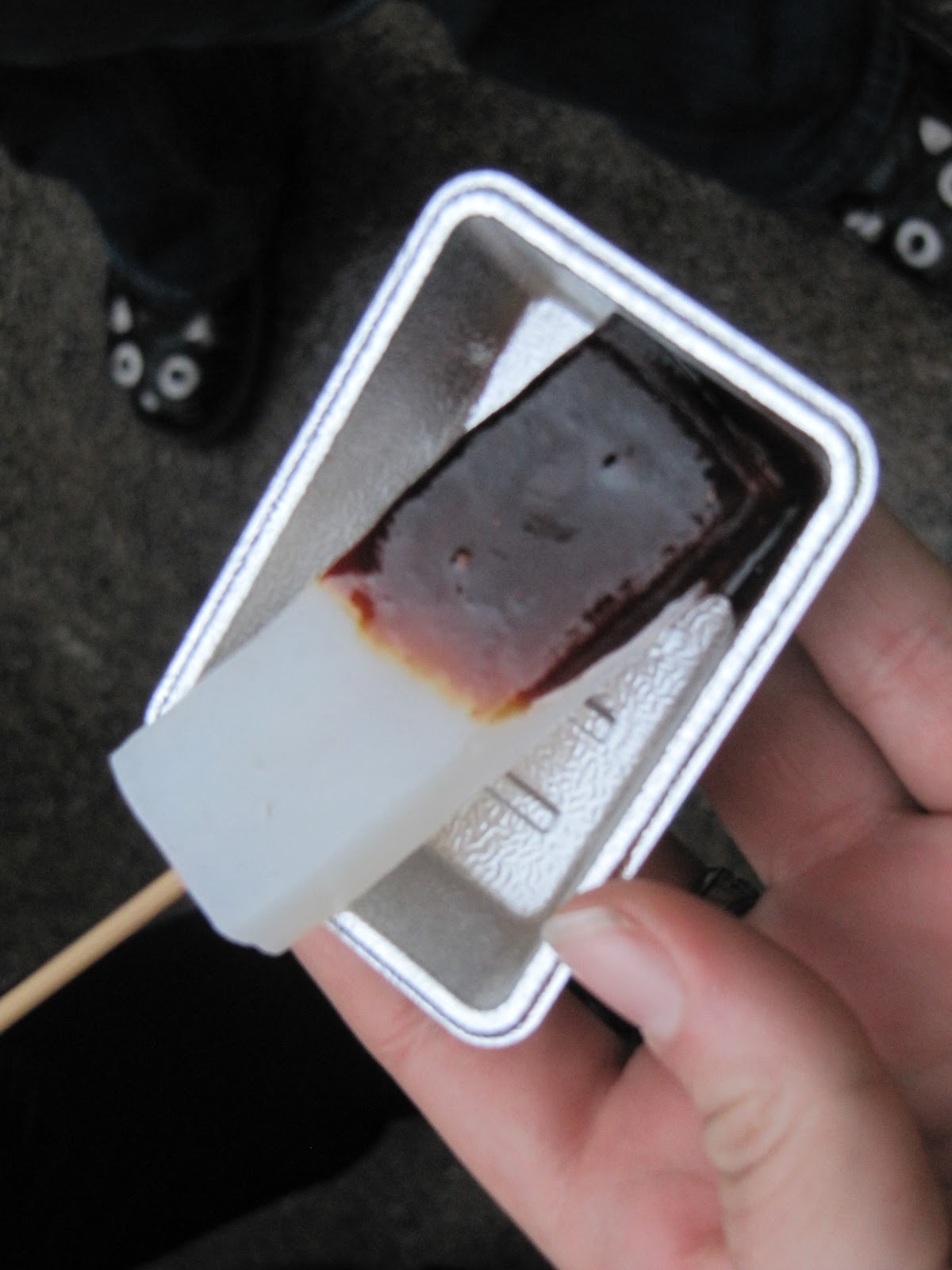
They gave us this to taste. The sauce is made of the miso, I believe, but I'm not sure what the white thing was, it had no taste.
TOYOTA COMMEMORATIVE MUSEUM
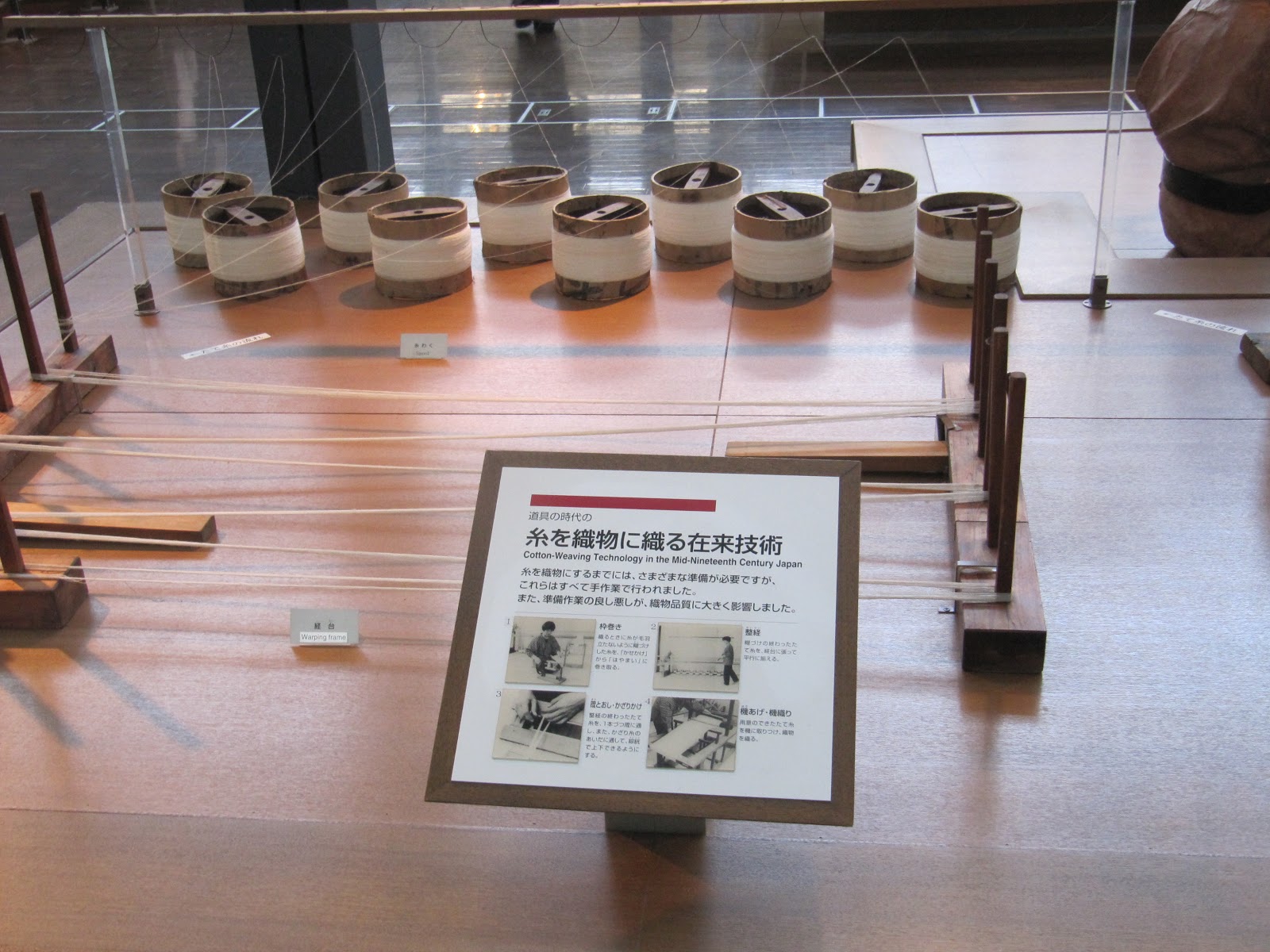
Toyota company was originally a loom company and it was called Toyoda, after the family name of the founder, Sakichi Toyoda.
The American cotton was actually bigger than the Asian cotton.
Again, I took a so many photos that I'm not going to comment on every single one.
This is the Type G Automatic loom machine that Sakichi Toyoda invented and with it became very rich, by selling the patent to another loom company. They then made sure it was never made and sold, because it was too good.
I'm not sure why there was a robot, posed as if playing the trumpet, but I thought it was cool.
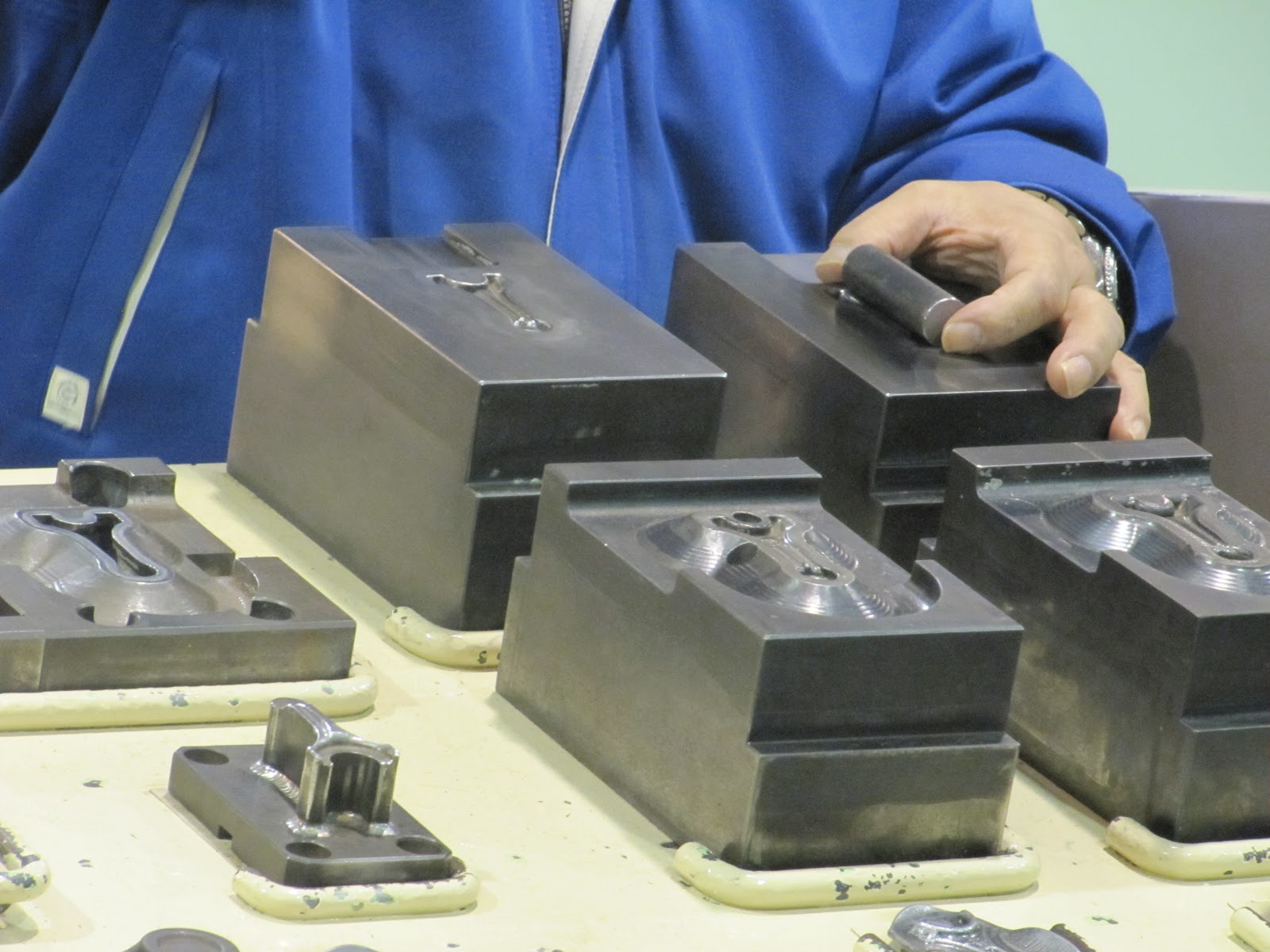
Then we moved into the automobile section. That machine makes mini connector rods, I believe they were called. By pressing a really, really hot metal cylinder into a mold with 120 tons, three times. The machine that makes the actual size, for cars, connector rods press the metal four times with, I think, 200 tons.
The molds and the man is holding the metal cylinder that is used to make the connector rod.
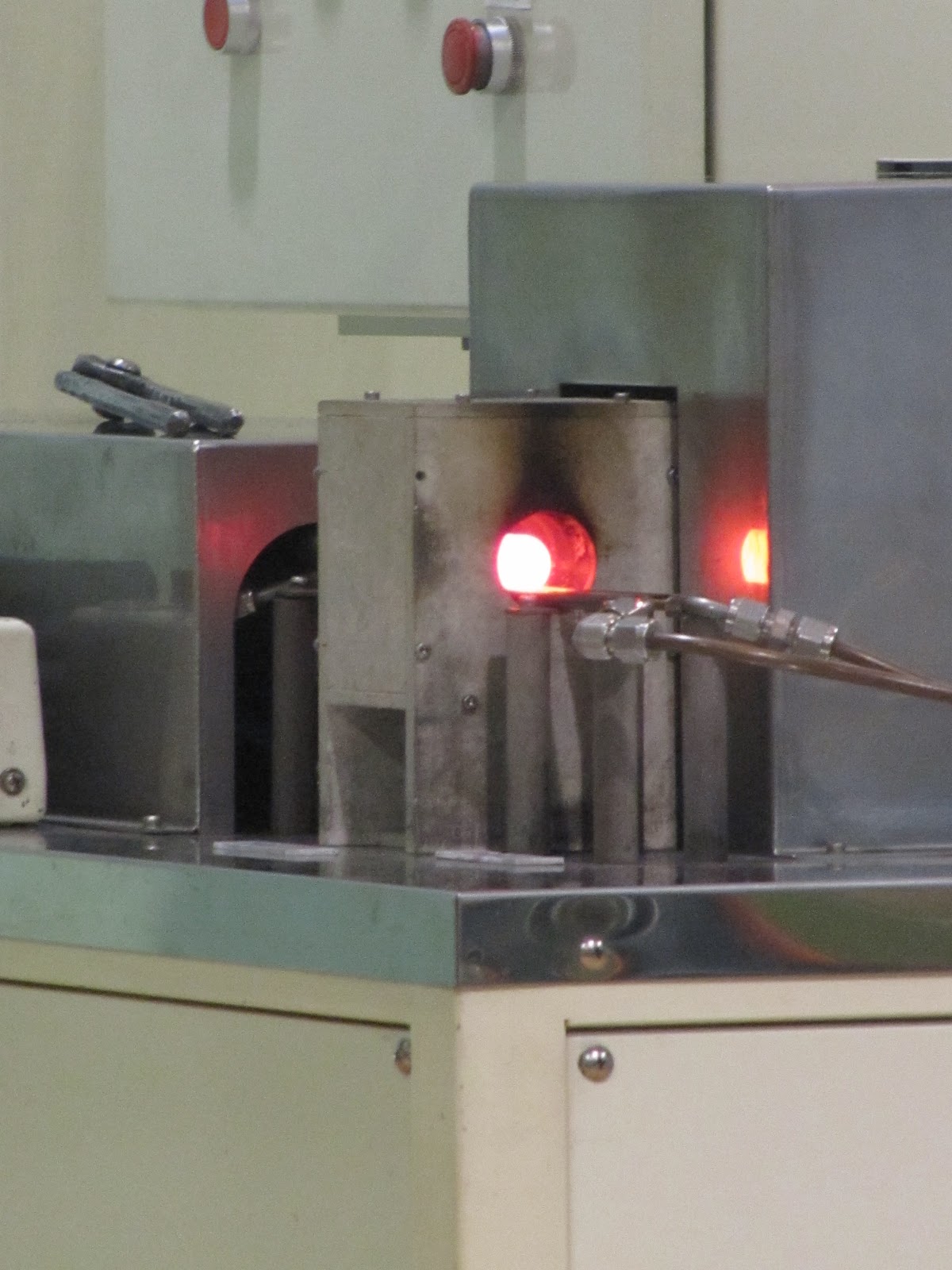
The cylinder being heated.
It's close to the temperature that is required to take to the mold.
On the right side is an example of the connector rods used in cars and what it looks like after being molded on the machine.
A really old microscope. I'm not sure why it was in this museum.
When cars used to be made by hand.
For some reason, they also had examples of different roof tiles.
And we got to the car section of the museum. Sadly, I ran out of battery on my camera, so I was unable to take many pictures.
FUN FACT
I'm not sure if it's common knowledge (I know I was surprised), but cars in Japan are all tiny. Even the trash trucks are much smaller than in the States.